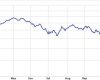
RBI repo rate hike has led to a downturn in the stock market today, with both Sensex and Nifty showing negative trends. Experts weigh in on the reasons behind this shift.
Understanding the RBI Repo Rate Hike
The recent decision by the Reserve Bank of India (RBI) to increase the repo rate has sent ripples through the financial markets, leading to a notable decline in major indices like Sensex and Nifty. Understanding the implications of the RBI repo rate hike is crucial for investors and market watchers alike.
The repo rate is the rate at which the RBI lends money to commercial banks. An increase in this rate typically signals a tightening of monetary policy aimed at controlling inflation. When the RBI raises the repo rate, borrowing costs for banks increase, which in turn affects loans and mortgages for consumers and businesses.
- Increased Borrowing Costs: As the repo rate rises, banks may pass on the higher costs to consumers, leading to increased interest rates on loans.
- Impact on Consumer Spending: Higher interest rates can discourage borrowing, ultimately reducing consumer spending and affecting economic growth.
- Market Sentiment: The immediate reaction in the stock market often reflects investor sentiment, with both Sensex and Nifty experiencing declines following the announcement.
- Long-term Effects: While short-term volatility may occur, the long-term impacts on the economy and stock markets will depend on how effectively the RBI manages inflation and economic growth.
In summary, the RBI repo rate hike can have significant repercussions on financial markets, influencing investor behavior and economic dynamics.
Market Reactions to Recent Changes
The recent RBI repo rate hike has sent ripples through the Indian stock market, with both the Sensex and Nifty experiencing noticeable declines. Investors are grappling with the implications of higher borrowing costs, which can dampen corporate earnings and consumer spending. This has resulted in a wave of selling pressure across various sectors.
Market analysts have pointed out several key factors contributing to the bearish trend:
- Increased Borrowing Costs: The hike in the repo rate means that banks will face higher costs of borrowing, which are likely to be passed on to consumers and businesses. This can lead to reduced liquidity in the market.
- Investor Sentiment: Fear and uncertainty regarding future economic growth have led to a cautious approach among investors, prompting many to secure their profits by selling off shares.
- Sectors Affected: Key sectors such as real estate, automobiles, and consumer durables have been particularly hard hit, as these industries rely heavily on financing.
- Global Influences: International market trends and geopolitical tensions have compounded domestic concerns, further pushing the indices into the red.
As experts weigh in on the implications of the RBI repo rate hike, many believe that the market may experience further volatility in the coming weeks until a clearer economic outlook emerges.
Expert Opinions on Stock Trends
Financial experts are closely analyzing the recent RBI repo rate hike and its implications for the stock market, specifically the Sensex and Nifty. According to Rajesh Kumar, a senior market analyst, “The increase in the repo rate is intended to curb inflation, but it also raises concerns about borrowing costs. This dual impact often leads to a bearish sentiment in equity markets.”
Many analysts predict that the elevated rates could impact corporate earnings, especially for companies reliant on debt for expansion. Shalini Verma, an investment strategist, notes that “When interest rates rise, companies face higher costs, which can translate into lower profitability. This could explain the recent downturn in indices like the Sensex and Nifty.”
Moreover, Vinay Agarwal, a financial consultant, emphasizes the need for investors to stay vigilant. “While the immediate reaction to the RBI repo rate hike may lead to a decline, historical trends show that markets can recover. The key is to focus on long-term growth rather than short-term fluctuations.”
In summary, while the RBI repo rate hike has created short-term volatility, experts urge investors to adopt a more measured approach, highlighting the importance of diversifying portfolios and remaining informed about economic indicators that could influence market trends.
Historical Context of Repo Rate Changes
The RBI repo rate hike has historically played a crucial role in shaping the Indian financial landscape. Understanding the context of previous changes in the repo rate can provide insights into the current market scenario.
Since the Reserve Bank of India (RBI) was established, adjustments to the repo rate have been a standard method for controlling inflation and stabilizing the economy. Over the years, the RBI has made several notable changes:
- 2008 Financial Crisis: During the global financial crisis, the RBI reduced the repo rate significantly to stimulate growth, lowering it from 9% to 5.0% in a span of months.
- 2013 Taper Tantrum: In response to global financial pressures, the RBI raised the repo rate sharply from 7.25% to 8.0% to curb inflation and stabilize the currency.
- COVID-19 Pandemic: To support the economy during the pandemic, the RBI slashed the repo rate to a historic low of 4.0%, aiming to boost liquidity and encourage lending.
As the RBI increases the repo rate once again, market participants are reflecting on past patterns to gauge potential impacts on the Sensex and Nifty. This historical context is vital for understanding how such changes affect investor sentiment and economic performance.
Impact on Investors and Traders
The recent RBI repo rate hike has sent ripples through the stock market, significantly impacting both investors and traders. With the Sensex and Nifty reflecting a bearish trend, many are re-evaluating their investment strategies in light of the increased borrowing costs.
Investors are particularly concerned about the potential for reduced corporate earnings as companies face higher interest expenses. This has led to a cautious approach, with many opting to hold back on new investments. The ripple effect is evident in the following ways:
- Increased Volatility: Traders are experiencing heightened volatility, as market sentiment shifts rapidly in response to economic indicators influenced by the repo rate hike.
- Sectoral Impact: Certain sectors, such as real estate and automobiles, which are sensitive to interest rates, are seeing more pronounced declines.
- Shift in Strategy: Investors are moving towards defensive stocks and fixed-income securities to mitigate risk, as the repo rate hike suggests a tightening monetary policy.
This cautious sentiment is likely to persist until there is clarity on the trajectory of inflation and economic recovery. As the market digests the implications of the RBI repo rate hike, both short-term traders and long-term investors must adapt their strategies to navigate the challenges ahead.
Future Predictions for Sensex and Nifty
As investors digest the implications of the recent RBI repo rate hike, future predictions for the Sensex and Nifty are becoming increasingly critical. Market analysts are divided, with some forecasting a bearish trend while others see potential for recovery.
Many experts believe that the immediate effects of the RBI repo rate hike could create volatility in the short term. They point out that higher borrowing costs may dampen consumer spending and corporate investments, which could lead to a decline in corporate earnings. This sentiment is reflected in recent trading patterns, where both the Sensex and Nifty faced downward pressure.
However, some analysts argue that the long-term outlook may not be as grim. They emphasize that with stable inflation and improving economic fundamentals, the markets could rebound once investors adjust to the new interest rate environment. Key factors that could influence future trends include:
- Global economic conditions: If global markets stabilize, domestic indices may follow suit.
- Corporate earnings reports: Positive earnings surprises could counteract initial market pessimism.
- Monetary policy adjustments: Future moves by the RBI could either stabilize or further disrupt market conditions.
In conclusion, while the RBI repo rate hike presents challenges, the actual impact on the Sensex and Nifty will depend on multiple variables in the coming months.
Conclusion: Navigating Market Volatility
In conclusion, the recent RBI repo rate hike has set the stage for increased market volatility, with investors and analysts alike grappling with the implications for the Sensex and Nifty. The immediate reaction observed in the markets reflects a cautious sentiment as participants reassess their strategies in light of higher borrowing costs.
As interest rates rise, the cost of financing for businesses increases, which can lead to reduced consumer spending and slower economic growth. This ripple effect is particularly significant for sectors sensitive to rate changes, such as real estate and automobiles, prompting investors to tread carefully.
The current market landscape, characterized by uncertainty, necessitates a strategic approach. Investors are encouraged to consider the following:
- Diversification: Spreading investments across various sectors may mitigate risks associated with rate hikes.
- Long-term Perspective: Keeping a focus on long-term goals can help weather short-term fluctuations.
- Monitoring Economic Indicators: Staying informed about macroeconomic trends will aid in making informed decisions.
As we navigate this period of adjustment following the RBI repo rate hike, staying adaptable and informed will be crucial for investors looking to safeguard their portfolios and capitalize on opportunities in the evolving market landscape.